
Root Canals and Extractions
When a tooth's pulp becomes infected or a tooth must be removed, Dr. Patel brings his gentle touch and extensive expertise to ensure your procedure is as comfortable as possible.
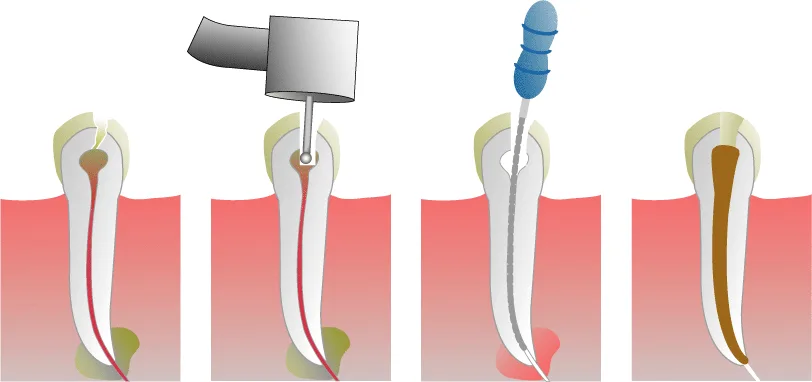
Root canal treatment
Root canal treatment is necessary when the pulp — the soft tissue inside your teeth containing blood vessels, nerves, and connective tissue — becomes inflamed or diseased.
During root canal treatment, Dr. Patel removes the diseased pulp. The pulp chamber and root canal(s) are then cleaned and sealed. If the infected pulp is not removed, pain and swelling can result, and the tooth may have to be removed.
Common causes of an infected pulp:
- A deep cavity
- Repeated dental procedures on the same tooth
- A cracked or broken tooth
- Injury to the tooth (even without a visible crack or chip)
If you continue to care for your teeth and gums, your restored tooth could last a lifetime. Regular check-ups are still necessary — a tooth without its nerve can still develop cavities or gum disease. Most root canals are relatively simple procedures involving one to two hours in our office.
Tooth extractions
Although permanent teeth are designed to last a lifetime, teeth that have become severely damaged or decayed may need to be extracted. Dr. Patel brings his gentle touch and extensive expertise to this procedure.
Reasons for extraction may include:
- Crowded mouth: Sometimes teeth are extracted to prepare for orthodontic treatment or to allow an impacted tooth room to erupt properly.
- Infection: If tooth decay extends to the pulp and infection is too severe for a root canal or antibiotics, extraction may be necessary to prevent the spread of infection.
- Risk of infection: Patients with compromised immune systems (for example, those undergoing chemotherapy or organ transplantation) may require extraction of at-risk teeth.
Dr. Patel will always discuss every option with you before proceeding with any extraction.
Frequently asked questions
Does a root canal hurt?
Most root canal procedures are performed under local anesthesia and involve little to no discomfort — in fact, they relieve the pain caused by the infected pulp. Most procedures take one to two hours in our office.
What happens if I don't get a root canal when I need one?
If the infected pulp is not removed, pain and swelling can result, and the tooth may eventually have to be removed. The infection can also spread to neighboring teeth or bone. Treating the infection early with a root canal is almost always preferable to extraction.
When is a tooth extraction necessary?
Extraction may be necessary when a tooth is too damaged or decayed to restore, when teeth need to be removed to prepare for orthodontics, when an impacted tooth cannot erupt properly, or when infection is so severe that it cannot be cured with antibiotics or a root canal.
Ready to get started?
Call our Claremont office or request an appointment online — we welcome new patients.