
Bone Grafts and Augmentation
Bone grafting restores the jaw bone needed to support dental implants. Dr. Patel performs bone augmentation and sinus lifts in our Claremont office under local anesthesia or IV sedation.
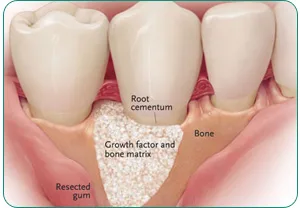
Bone grafting is a safe and highly successful procedure that involves building up or adding bone to the jaw by using natural bone from another location and/or donor, processed, or synthetic bone materials. Often the new bone can be obtained from inside the mouth.
What to expect
Dr. Patel performs bone grafts in our office using local anesthesia to numb the areas involved, sometimes combined with intravenous sedation to reduce anxiety. Dr. Patel is board-certified in intravenous sedation.
After the procedure, you will typically receive antibiotics, pain medication if needed, and an antibacterial mouthwash. You will be instructed to avoid certain foods and pressure on the graft site. Most patients are able to return to work and everyday life while the graft heals between dental appointments.
Implants are placed after the grafted bone has fused with the existing bone — a process that may take three or more months.
Sinus lift (sinus augmentation)
Missing upper back teeth are among the most difficult to restore. When these teeth are lost, the sinus cavity becomes larger as the natural bone deteriorates over time.
A sinus lift — also called sinus augmentation or sinus elevation — is a bone-augmentation procedure for patients with insufficient natural bone in the upper jaw for dental implant placement. The procedure adds bone below the sinus so one or more implants can be placed.
A properly performed sinus lift does not affect speech, intonation, or cause sinus problems. After the bone has developed (usually four to twelve months), implant placement can proceed.
Contact our office to discuss whether bone grafting or a sinus lift is the right preparation for your implant treatment.
Frequently asked questions
Why would I need a bone graft before an implant?
After a tooth is lost, the surrounding bone begins to shrink over time. If too much bone is lost, there may not be enough to anchor an implant securely. A bone graft restores the necessary bone volume so an implant can be placed successfully.
Where does the bone graft material come from?
Bone graft material can come from your own body (often taken from inside the mouth), donor bone, processed bone, or synthetic materials. Dr. Patel will explain the advantages of each option so you can make an informed decision.
How long does it take for a bone graft to heal?
The grafted bone typically needs three or more months to fuse with the existing bone before implants can be placed. The exact time depends on the graft location and the density of your bone.
Ready to get started?
Call our Claremont office or request an appointment online — we welcome new patients.